We donate native plants, plant them, release them to support farmers who are improving their waterways. This one is at Rangitoto Lands, Waimahora.

We donate native plants, plant them, release them to support farmers who are improving their waterways. This one is at Rangitoto Lands, Waimahora.
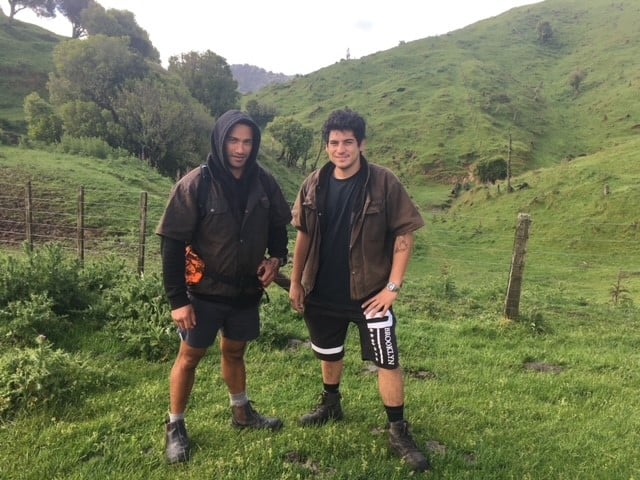
Stafford and Layton shown on-site at Rangitoto Lands, ready to place a number of DOC 200 predator traps. These traps are approved by the Dept of Conservation as a humane kill trap for stoats, rats and hedgehogs.
Kaitiakitanga Charitable Trust is able to provide youth employment in the building and setting of the traps, whilst creating a safer habitat for our native wildlife.
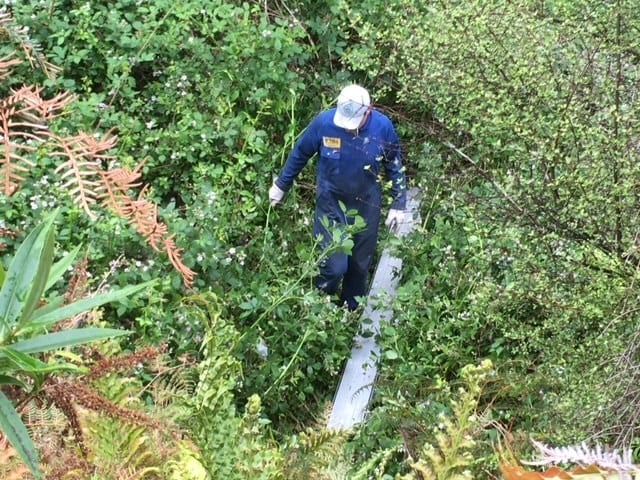
Volunteer worker Kelvin shown here clearing track so that we can get amongst 6-foot high blackberry plants.
In one year we can begin the next stage of restoration of this land to its natural state, by planting eco-sourced native plants. Watch this space.
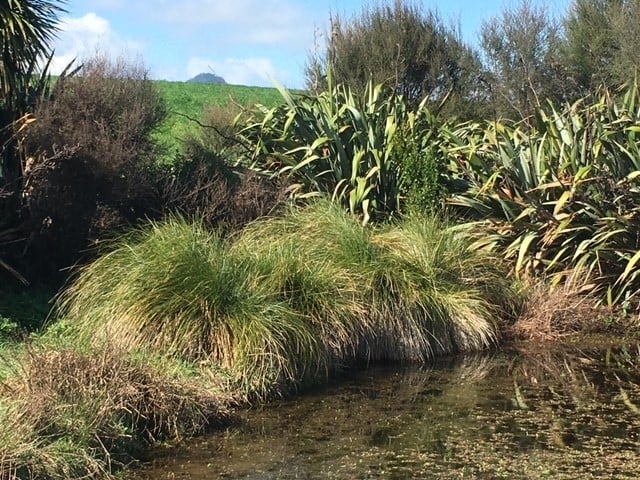
Planting at Tauwhare started off as swampy paddock with very little natural vegetation. We maintain this project and love to see the birdlife increase each time.
A kotukutuku visited here when the water first came back after we formed a pond during a drought.
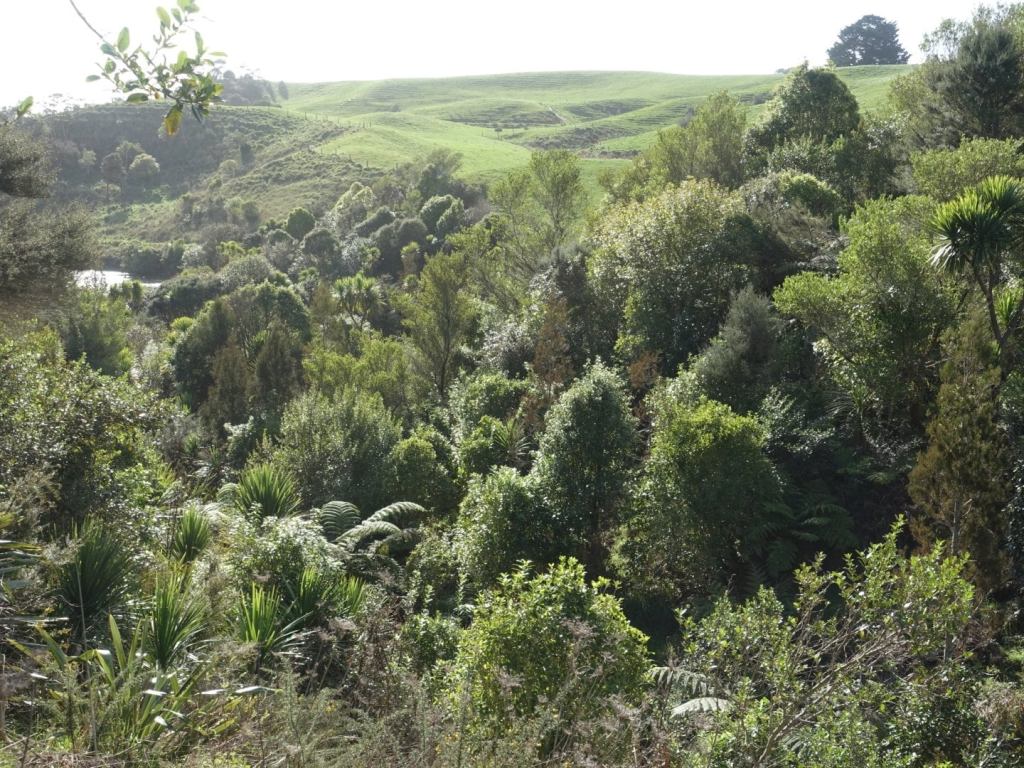
So rewarding looking back on an area that we have spent five years maintaining, and adding thousands of native trees. In the distance you can see the newly fenced-off area which has had two years of planting.
More to go…
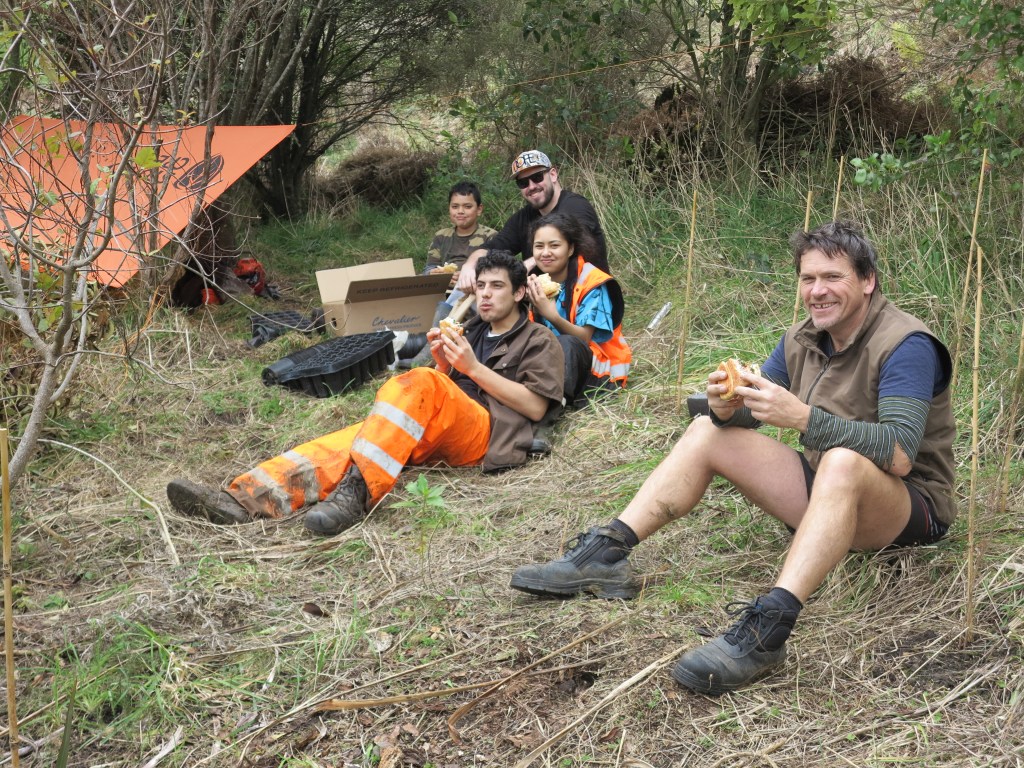
Kelvin, Layton, Koa , Sam and Takari all out lunching and having a rest from planting mahi, in August 2019.
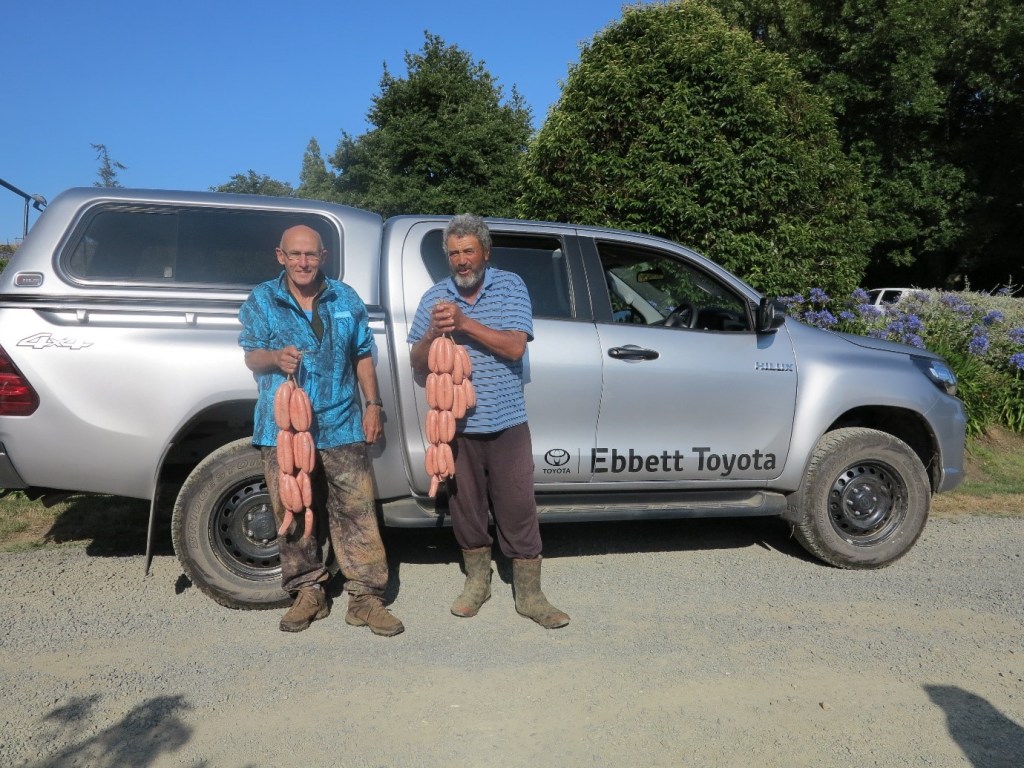
Jim and Willy pictured with a sample of the small goods we make at Rangitoto Lands.
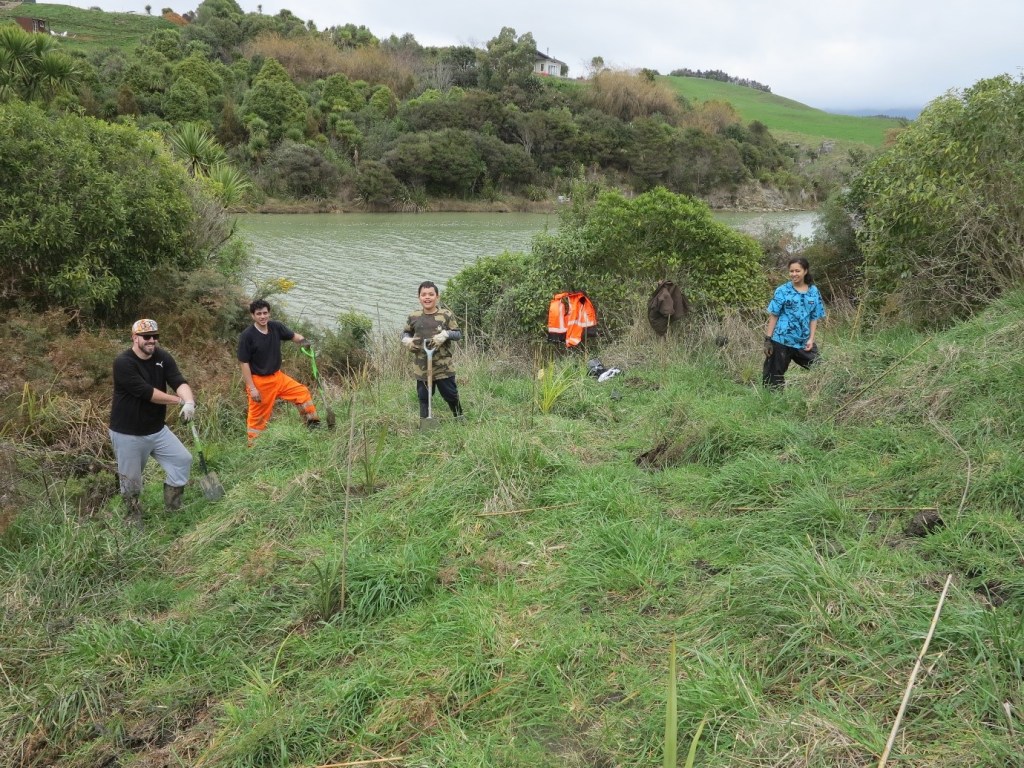
A brief respite for our planting team after a long days work in August 2020.
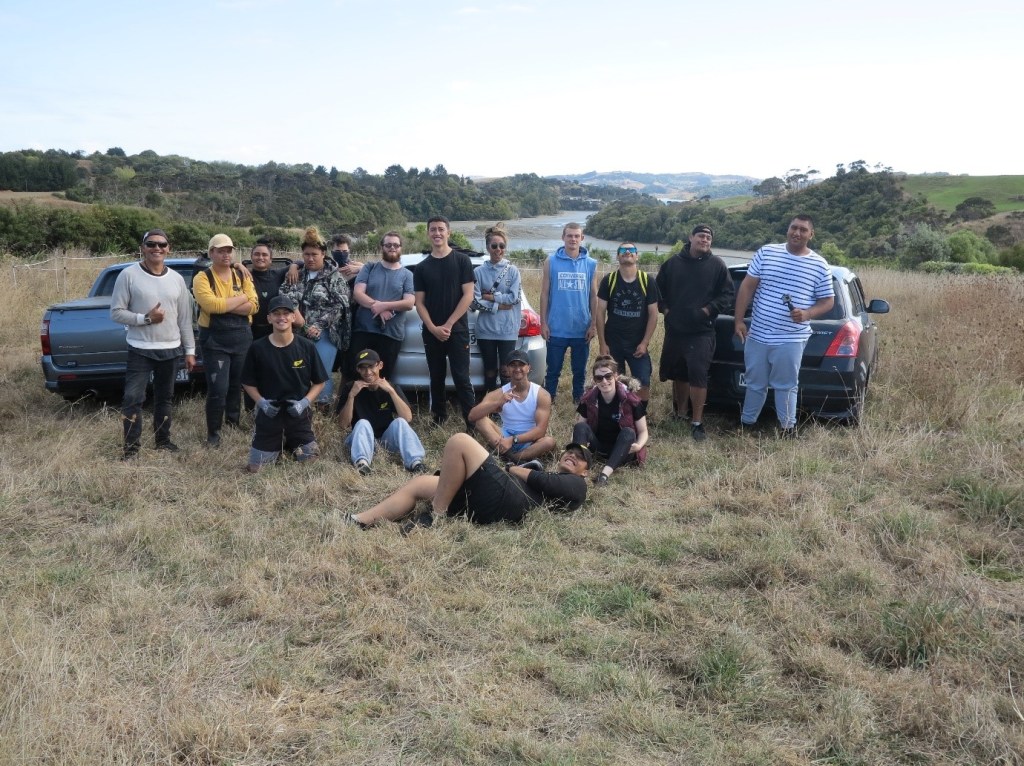
Pictured is the Future Leader’s group after releasing natives at Okete.
Small goods (meat) from the Rangitoto lands which is distributed out to the local families.

 kaitiakitangatrust.com